
Physiological, Biological and Molecular Studies on Musa spp. (Banana) and GDV Application

Banana (Musa Spp. Family Musaceae) Is The Fourth Most Important Fruit Crop In The World. Banana Is Being Cultivated In Tropical And Subtropical Countries As A Major Staple Food For Millions Of People. They Contribute To Food Security By Producing Fruit Year-round And Providing Incomes To Rural Populations. The Estimated Current World Production Of Bananas Is 97.5 Million Tons Per Year, Covering 10 Million Ha Land. Developed Countries Are The Usual Destination For Exporting Bananas. Production, As Well As Exports And Imports Of Bananas, Are Highly Concentrated In A Few Countries. Banana Contributes 37% To Total Fruit Production In India. In India, Gujarat Is The Leading Producer Of Bananas After Tamil Nadu And Maharashtra In The Country. During 2008-09, The Area And Production Of Bananas In Gujarat Were 60.9 Thousand Ha And 3571.6 Ha Per Metric Ton Respectively. Banana Is Grown Under Diverse Conditions And Production Systems And Hence A Selection Of Varieties Is Based On Needs And Propagation Feasibility. Traditionally, Banana Is Grown As A Perennial Crop Where The Plant Is Allowed To Produce Continuous Shoots From A Subterranean Stem. But, The Yields Fall After Three To Five Years And Decline Rapidly After Ten To Fifteen Years. Therefore, In Vitro Techniques Have Become The Most Popular Technique For Producing A High Number Of Plantings Material For Bananas. The Common Stages Known For The Micropropagation Of Most Plants Are Sterilization And In Vitro Aseptic Culture, Shoot Multiplication, Root Induction, And Acclimatization. The Desi, Red, Khasdi And Soneri Varieties Of Chorvad Region [21°1'36"N 70°15'53" E] In Gujarat Is Popular Cultivars For Rural Banana Growers Due To Their Higher Keeping Quality, Better Taste, And Flavor, However, Studies On These Varieties Are Rather Scantes. For This Reason, There Is An Increasing Demand For These Cultivars To Be Studied.
Objectives of work
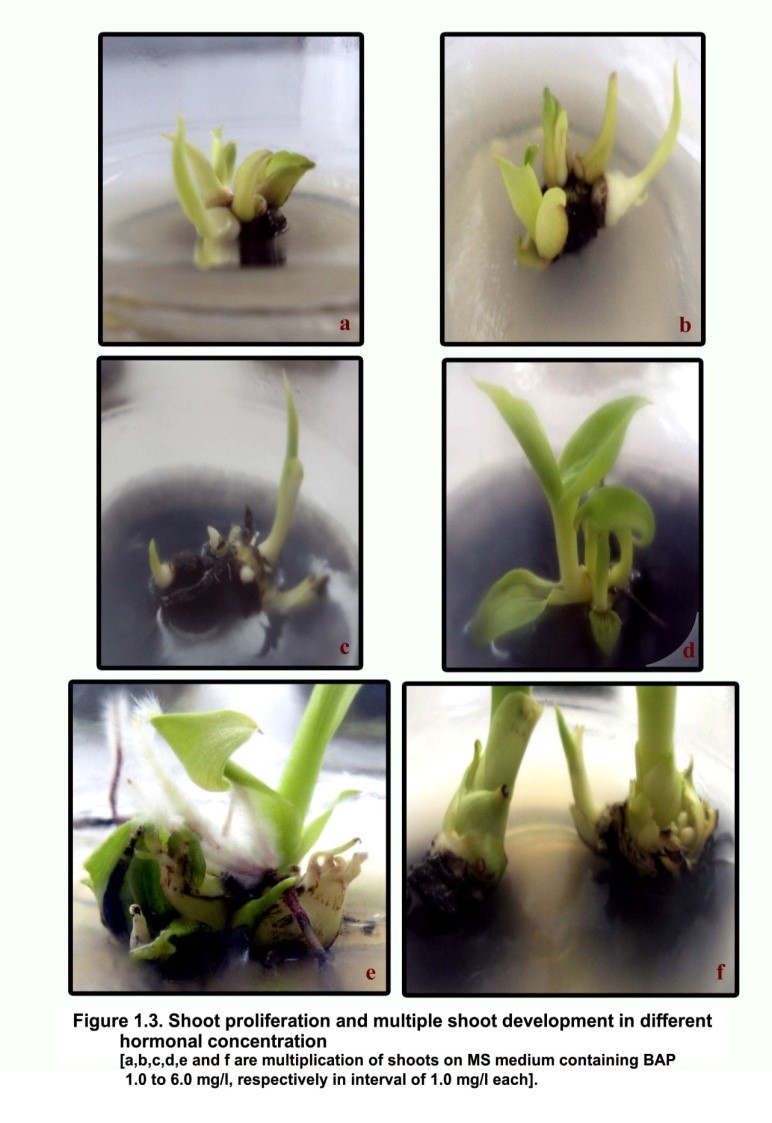
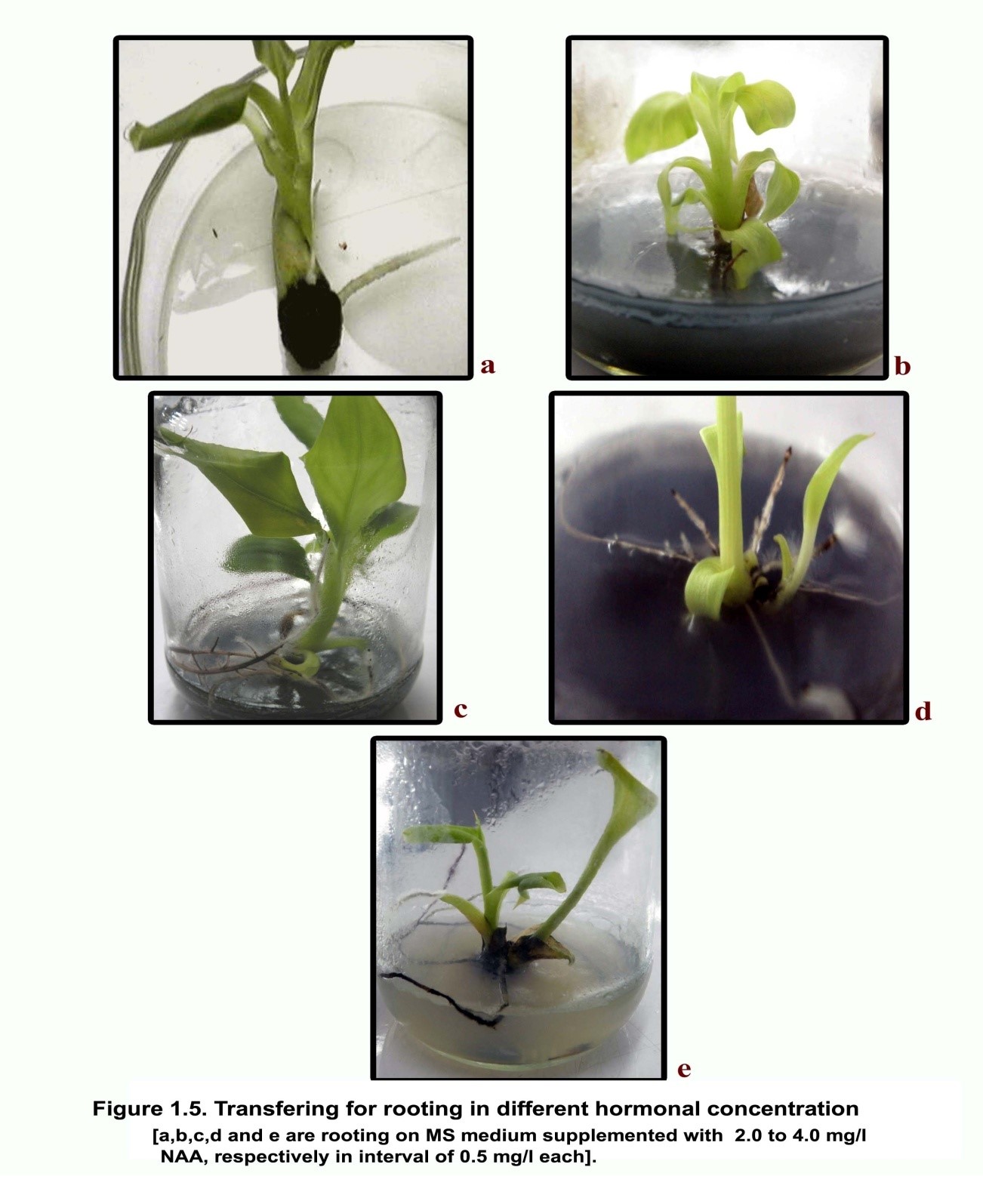
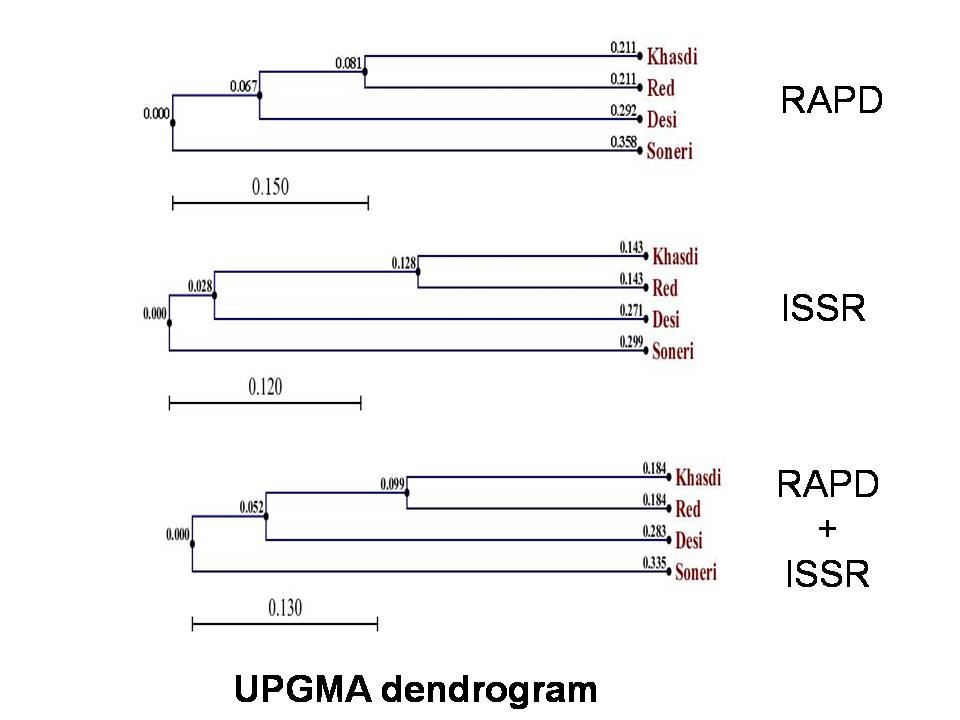
To Develop An Efficient And Rapid Protocol For In Vitro Propagation Of Bananas. To Study RAPD And ISSR Molecular Markers To Determine The Genetic Diversity And Distance Among A Varying Variety Of Musa Sp. Study The Changes In Antioxidant Potential And Phenolic Content In Fully Expanded Leaves Of Various Musa Varieties. RP-HPLC Is Used For The Identification And Quantification Of Major Phenolic Compounds In Levees.
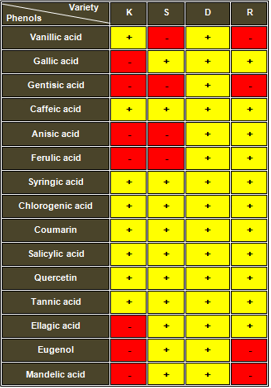
Average value of antioxidant potential, total phenol content, monophenol and diphenol of four Musa varieties [K-Khasdi, S-Soneri, D-Desi and R-Red]
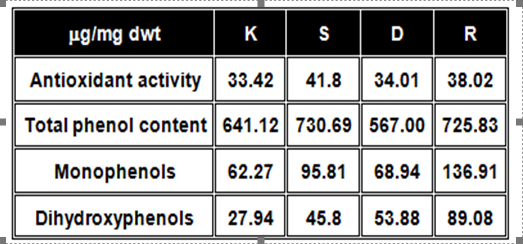
The Hormonal Concentration 5 Mg/L BAP In Media Is Suitable For Multiple Shoot Induction While 3 Mg/L NAA Is Suitable For Batter Root Induction In Banana. From The Result Of ISSR And RAPD Marker Techniques, All Dendrograms Indicate Khasdi And Red Varieties Were Close From The Diversity Point Of View, While Soneri Was Genetically Dissimilar From All Varieties. The Antioxidant Potential And Total Phenolic Content Were The Highest Observed In The Soneri Variety, Compared To Others Verities. Tannic Acid, Quercetin, Chlorogenic Acid, Syringic Acid, And Caffeic Acid Were Detected In All Four Musa Varieties.
Output of work
This Protocol Provides Rapid And Efficient Micropropagation Of Bananas. The Hardened Plantlets Are Successfully Acclimatized In The Greenhouse Chamber. The Tandem Repeats Of GT Rich Region Were Observed In The Nucleotide Sequence Of The Desi Variety. These Tandem Repeats Can Be Used As Microsatellite Markers For Desi Variety. Overall The Phenolics Compounds Were Found In The Higher Concentrations In The Banana Leaves. A Detailed Study Is Needed For The Selection Of The Best Solvent And Extraction Procedure To Make Use Of This Waste Product.
Publication
L.D. Chariya, V.B. Mandaliya And V.S. Thaker (2013) Conversion Of Monomorphic Band Into Polymorphic Pattern Using Nucleotide Sequencing Data In Musa Varieties. Genet Plant Physiol 3:77–89